


Also commonly known as arthritis, we are talking about a degenerative joint disease very common among dogs.
Unlike cats, the causes of arthritis in dogs are secondary. Whereas in cats, the primary cause is due to wear and age, without any other justification, in dogs, on the other hand, most problems are usually secondary to trauma, ligament degeneration, developmental diseases such as dysplasias, fractures. Therefore, it is necessary to investigate and determine the initial defect before just treating arthritis.
It is also worth noting that radiographic or molecular changes in the joints do not necessarily correlate with clinical signs. Thus, we can find radiographs with significant bone remodeling that do not cause any symptoms in the dog and vice versa, so each animal must always be treated independently according to their discomfort.
Contrary to popular belief, there is usually not a large amount of inflammatory tissue, so treatment with anti-inflammatories is generally aimed at pain control, not reducing inflammation. For these reasons, the success is usually not 100%, but the goal is to improve pain and quality of life.
Acute pain sometimes also has a purpose, which is to avoid overexertion and further tissue damage, serving as a brake to prevent more harm to the joint. But if the pain is long-term, it can even trigger behavioral changes, sleep disturbances, and decrease in quality of life. In this kind of pain, they do not usually vocalize as much as in acute pain. Some of the symptoms we commonly find in animals with osteoarthritis, besides lameness, are lagging behind on walks, difficulty getting up, not wanting to jump, difficulty going up or down stairs, stiffness, etc.
To assess chronic pain, we can use pressure or force platforms, to locate the affected limb(s), gait analysis, and validated questionnaires to use with the caregiver to help us understand possible behavioural changes they have noticed. Additionally, this will serve to objectively observe the changes seen after establishing treatment.
At the Lliga, we have several dogs affected by osteoarthritis that, depending on their pain episodes, are treated using different methods: trauma surgeries when necessary, strict weight control, long daily walks to maintain good musculature, non-steroidal analgesics and anti-inflammatories for pain control, and even monoclonal antibody treatment like Librela in chronic and severe cases.
Some examples of our animals are:
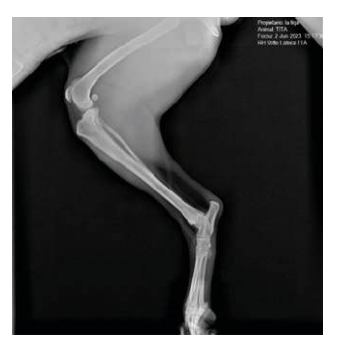
Tita: with osteoarthritis secondary to a poorly healed old fracture in a tarsus.
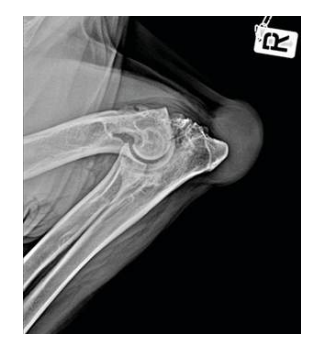
Goliath: with osteoarthritis secondary to a dysplasia of both elbows with microfractures and arthritis.
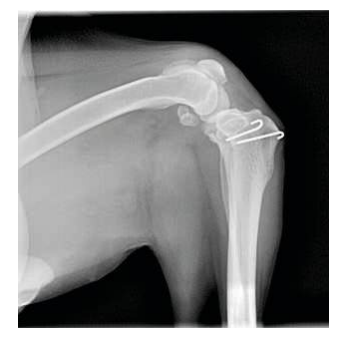
Duna: with osteoarthritis secondary to grade II patellar luxation.
Míriam Rodríguez
Veterinary
Lliga per a la protecció d’animals i plantes de Barcelona










3 CommentsComment on Facebook